

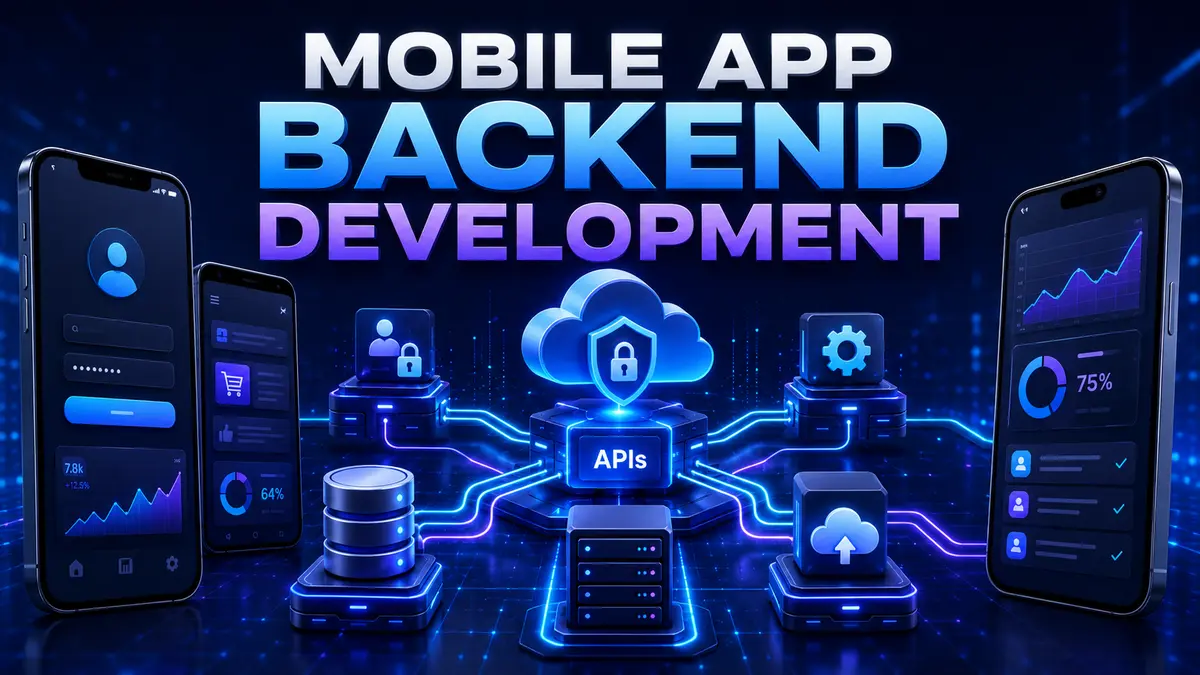
A mobile application backend is the server-side system that manages users, business rules, data, integrations and communication for a mobile product. The application installed on a phone presents the experience, while the backend performs trusted operations and coordinates shared information.
Products such as marketplaces, booking applications, delivery systems and business tools rely heavily on backend quality. A beautiful mobile interface cannot compensate for unreliable data, weak permissions or slow services.
Backend design begins with users and actions. Define who creates, reads, changes and approves information. Identify which operations must happen immediately and which can run in the background.
Map failure behavior as well. A payment may succeed while a later notification fails. The backend needs a way to detect and repair incomplete workflows without duplicating the original transaction.
Mobile applications usually communicate with the backend through APIs. A clear API uses consistent names, validation, responses and errors. It should support version changes without unexpectedly breaking applications already installed on user devices.
Document authentication, request fields, responses and limits. Our API development services guide explains design, security, testing and lifecycle practices in more detail.
Authentication confirms user identity. Authorization decides which information and actions that identity can access. The backend must enforce both because mobile application code can be inspected or modified.
Use short-lived tokens where suitable, secure session handling and appropriate multifactor authentication for sensitive products. Administrative operations need stronger controls and traceable approval.
The data model should reflect business ownership and relationships. Choose storage technology based on consistency, access patterns, scale and team capability rather than fashion.
Plan migrations as the product changes. Backups need tested restoration, not only scheduled creation. Sensitive information should have defined retention and deletion rules.
Push notifications can improve engagement and operational response, but they should be relevant and controlled by user preferences. Delivery is not guaranteed, so critical business processes should not depend on a notification alone.
Queues can handle emails, reports, media processing and integrations without delaying the mobile response. Background work needs retry limits, monitoring and protection against duplicate execution.
Backends often connect payments, maps, messaging, identity, analytics and enterprise software. Each external service can become slow, unavailable or change its interface.
Use timeouts, controlled retries and clear reconciliation. Record enough information to diagnose failures without exposing sensitive data. Contracts and usage limits should be reviewed before the product depends on a provider.
Security must continue after launch. Access reviews, vulnerability handling and incident response need named owners.
Scalability means handling growth without losing acceptable performance or control. Begin with realistic usage estimates and design the main bottlenecks. Unnecessary complexity can slow development before scale exists.
Caching, database indexing, queues and horizontal capacity can help when evidence shows a need. Load testing should simulate important workflows, not only simple requests.
Monitor availability, errors, latency, queues, databases, integrations and important transactions. Alerts should connect to an owner and response process. Crash data from the mobile application should be correlated with backend events where possible.
Record deployment changes so teams can connect new incidents with recent releases. Our application maintenance guide explains incident, update and continuous-improvement practices.
Separate development, testing and production environments reduce accidental impact. Use repeatable builds, reviewed changes and controlled deployment. Database changes need compatible release plans because older application versions may remain active.
Staged releases and feature controls can reduce risk. A rollback plan should consider code, configuration and data.
Cost depends on user roles, workflows, integrations, data, traffic, security, administration and support. Cloud usage may start small but grow with storage, messages, processing and network activity.
Estimate development and operations together. Include monitoring, backups, third party fees, maintenance and emergency support. Cloud architecture guidance is available in our cloud consulting services guide.
No. A simple offline utility may operate entirely on the device. Shared accounts, synchronized data, payments and administration usually require backend services.
Yes. Well-designed APIs can support several clients while applying consistent business rules and permissions.
Managed services can accelerate common features, while custom development offers more control. The decision depends on product differentiation, scale, compliance and team skills.
TechFusion Gear designs mobile backends, APIs and cloud integrations around security, reliability and maintainability. Contact our team to plan a new backend or modernize an existing mobile platform.