

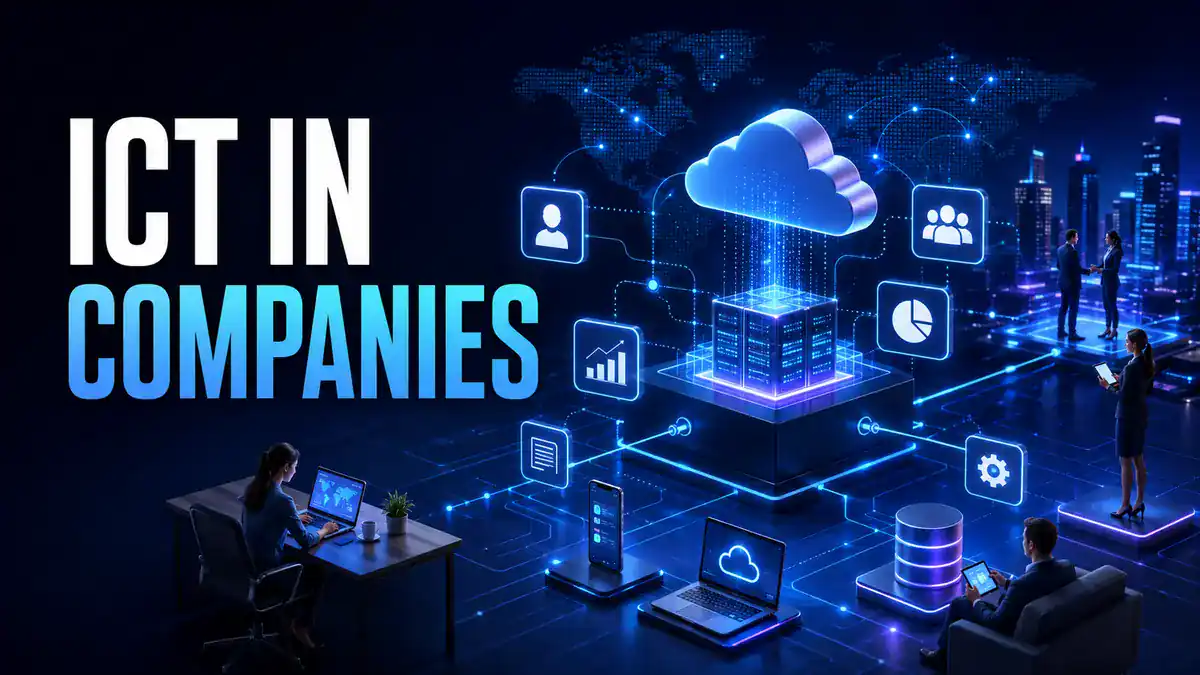
Quick answer ICT in companies brings information, communication, devices, software, networks and people together so work can move reliably. It supports collaboration, customer service, operations, data driven decisions, remote work, automation and security. Its value comes from connecting business processes, not simply buying more technology.
ICT means information and communication technology. The term covers the systems used to create, store, process and exchange information. For a business, that may include email, cloud applications, phones, networks, databases, websites, mobile apps and support services.
Businesses use messaging, email, video meetings, voice systems and shared workspaces to coordinate employees, suppliers and customers. Good ICT reduces delay and makes decisions easier to record.
Too many disconnected channels can create the opposite result. Define which tool supports urgent communication, projects, formal approvals and customer interaction. Establish ownership and retention rules.
Sales, inventory, finance, service and management often depend on different applications. ICT architecture connects these activities through shared data and integrations. This reduces duplicate entry and gives teams a more consistent view.
Map the business process before automating it. Software will not fix unclear ownership or unnecessary approval. Our custom software development guide explains how discovery supports better systems.
Websites, ecommerce, mobile apps, customer portals and support channels make it easier for customers to find information and complete tasks. Customer relationship systems help teams manage enquiries and follow up.
The experience should remain consistent across channels. A customer should not need to repeat the same information because the website, sales team and support desk use disconnected records.
Reliable systems can turn operational activity into useful reports. Leaders may track sales, capacity, service quality, cost and risk. Data becomes valuable when definitions and ownership remain consistent.
Start with decisions rather than dashboards. Identify what someone needs to decide, which data supports it and how often it must be updated. Avoid collecting information without a business purpose.
Cloud applications, secure access, collaboration and managed devices allow people to work across locations. Remote work still needs identity, support, equipment and communication standards.
Protect sensitive information on laptops and mobile devices. Use strong authentication, updates, encryption and controlled sharing. Staff should know how to report a lost device or suspicious access.
Automation can route approvals, generate documents, synchronize systems and notify people when action is required. It reduces repetitive work and improves consistency.
Choose processes with clear rules, stable inputs and meaningful volume. Keep human review where judgment or exception handling matters. Measure time saved, errors reduced and completion rather than the number of automated steps.
Business systems need monitoring, backup and recovery. Identify critical services and how long the company can operate without them. Prepare alternate communication and manual procedures for important work.
Test recovery rather than relying only on a backup status. Include accounts, applications, data, devices and vendor contacts. Our guide on outsourcing IT support without losing control covers ownership and documentation.
Connected systems increase convenience and risk. Manage identities, devices, networks, cloud settings, suppliers and software updates. Give people only the access they need and remove it promptly when roles change.
Security includes process and behavior. Provide practical guidance for passwords, suspicious messages, data sharing and incident reporting. Make it easy for staff to ask for help.
Standard platforms, useful automation and centralized support can reduce manual work and duplication. Cloud services may replace some infrastructure, but they still require configuration, access control and cost management.
Evaluate total cost, including licences, devices, implementation, training, support, integration and exit. Low purchase cost can become expensive when systems create repeated manual work.
Growing companies need systems that support more users, locations, transactions and products. Documented architecture and integrations make expansion more predictable.
Scalability is not only server capacity. It includes onboarding, permissions, reporting, support and governance. A system that performs quickly but requires manual setup for every employee may still block growth.
A practical strategy is a prioritized operating plan, not a list of trendy tools.
Internal teams provide close business context and direct control. Managed providers can add coverage, process and specialist skills. Many companies use both.
Define who owns service, security, architecture, vendors and projects. Our comparison of staff augmentation and managed services helps clarify the model.
Track service reliability, user experience, process completion, security exceptions, recovery readiness and total cost. Connect each improvement to a business outcome such as faster fulfilment or better customer response.
Review technology with business leaders regularly. ICT should evolve as products, teams and risks change.
ICT includes computing, software, networks, telecommunications, data and the services used to manage them. The exact scope varies by company.
The terms often overlap. ICT places additional emphasis on communication technologies and how information moves between people and systems.
Yes, but it can be simple. A clear inventory, ownership model, security baseline and improvement list can prevent waste and disruption.
TechFusion Gear helps companies plan software, cloud, communication and managed IT around measurable business needs. To review your ICT priorities, contact TechFusion Gear.