

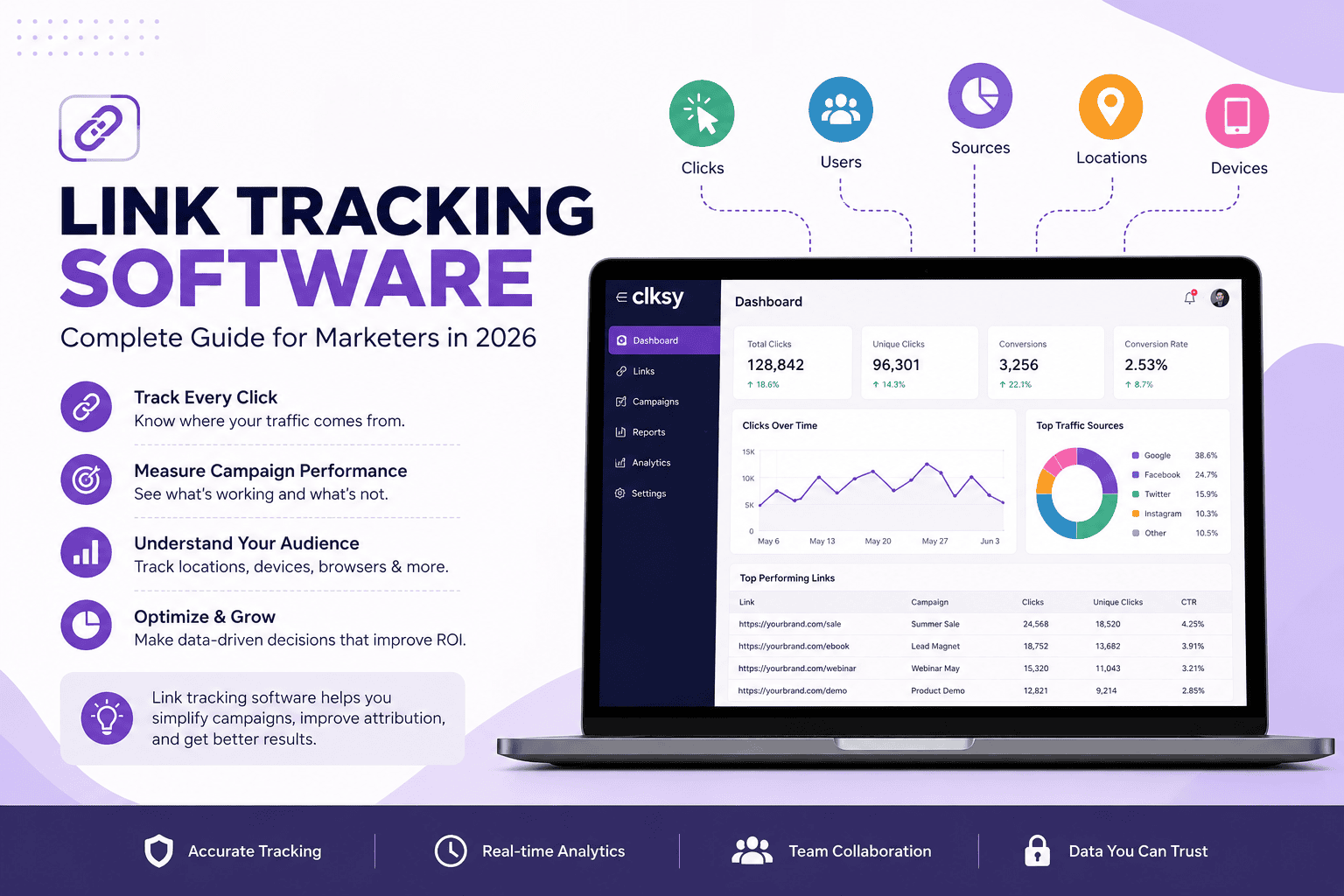
Every digital marketing campaign begins with a link. Whether you’re running Google Ads, Facebook campaigns, email newsletters, influencer promotions, or affiliate marketing, understanding what happens after someone clicks your link is critical.
This is where link tracking software becomes an essential part of every marketer’s toolkit.
Instead of relying on spreadsheets, manually creating UTM parameters, or guessing which campaign generated conversions, link tracking software provides centralized tracking, campaign attribution, and actionable analytics.
In this guide, we’ll explain how link tracking works, why it matters, and how platforms like Clksy help businesses optimize their marketing performance.
Link tracking software is a platform that monitors how users interact with URLs across different marketing channels.
It records valuable data such as:
Instead of seeing only traffic numbers, businesses gain insights into which campaigns generate qualified leads and revenue.
Without proper tracking, marketing decisions are often based on assumptions.
Businesses spend money on:
But without tracking links, it’s difficult to determine which campaigns are actually delivering results.
Link tracking provides measurable data that supports better budgeting, campaign optimization, and ROI analysis.
A reliable link tracking platform should include:
Organize marketing campaigns in one dashboard while keeping all tracking links structured and easy to manage.
Automatically generate consistent UTM parameters for Google Analytics without manual errors.
Track:
Understand which marketing channel contributes to leads, sign-ups, or purchases.
Allow multiple marketing team members to create, organize, and monitor tracking links from a single workspace.
Visual dashboards simplify campaign performance analysis and help marketers identify high-performing traffic sources.
Implementing a dedicated tracking solution offers several advantages:
Clksy is designed to simplify link tracking by providing a centralized platform for managing campaign URLs and tracking performance.
Instead of creating and maintaining spreadsheets of UTM-tagged links, marketers can organize campaigns, generate standardized tracking URLs, and review performance metrics from one dashboard.
Some of its capabilities include:
This approach reduces manual work while improving consistency across marketing campaigns.
Link tracking software is valuable for:
Any organization running campaigns across multiple channels can benefit from centralized link tracking.
To maximize the value of your tracking data:
Following these practices results in cleaner reporting and more reliable marketing insights.
Businesses that don’t use link tracking often encounter:
These issues make it harder to identify which campaigns deserve additional investment.
Link tracking is the process of monitoring clicks and user interactions with URLs to evaluate campaign performance and attribution.
It provides accurate campaign analytics, simplifies UTM management, improves attribution, and supports data-driven marketing decisions.
Yes. While link tracking doesn’t directly improve search rankings, it helps measure traffic sources, campaign effectiveness, and user engagement, which supports broader digital marketing strategies.
Yes. Agencies managing multiple clients benefit from centralized campaign management, reporting, and collaboration features.
Modern marketing relies on accurate data, and link tracking software plays a critical role in understanding campaign performance across channels. Whether you’re managing paid advertising, email marketing, social campaigns, or affiliate partnerships, organized tracking leads to better decisions and improved return on investment.
Platforms like Clksy help streamline link management, standardize campaign tracking, and provide actionable insights that reduce manual effort and improve reporting accuracy.