

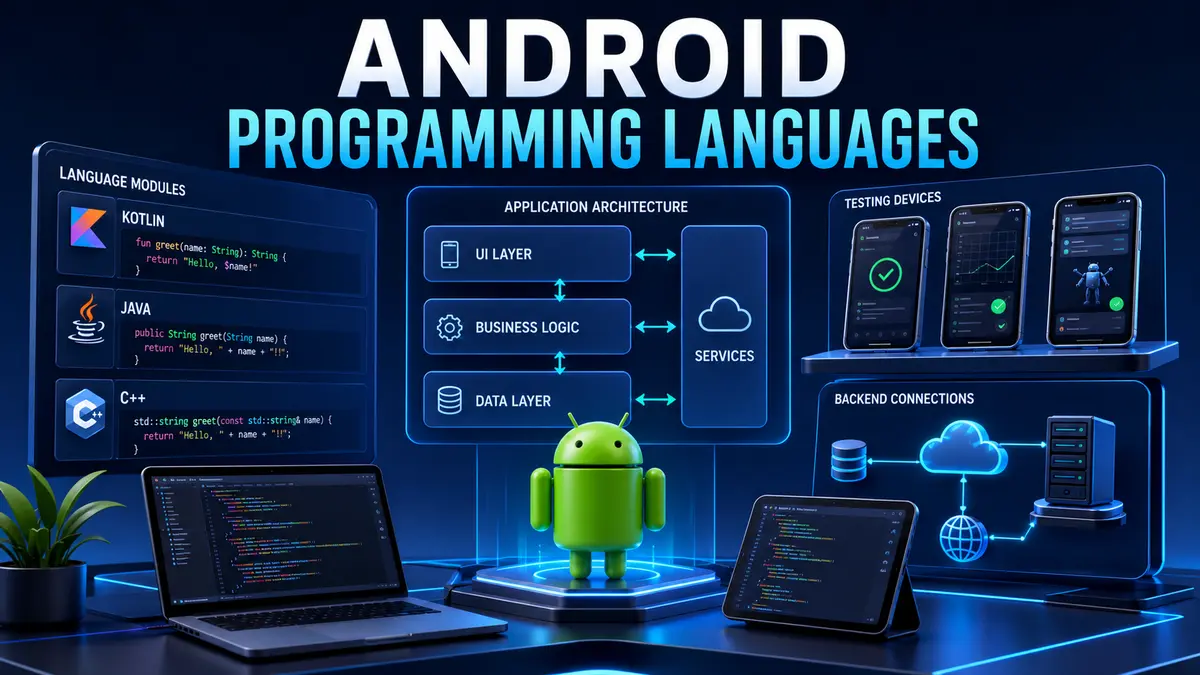
Android applications can use Kotlin, Java and C++, while cross-platform technologies introduce additional language choices. For most modern Android product development, Kotlin is the main starting point. Java remains important for existing code and libraries, while C++ supports selected performance-sensitive or portable native components.
People searching for an Android computer language often expect one answer. In practice, the best choice depends on the product, existing code, team skills, performance needs and maintenance plan.
Google’s official Android Kotlin guidance presents Kotlin as a modern language for building Android applications. It offers concise syntax, null-safety features, coroutines and strong integration with Android development tools.
Kotlin interoperates with Java, which allows teams to add new Kotlin features to an existing Java application gradually. This makes it practical for both new products and controlled modernization.
Java has a large Android history and remains relevant across existing applications, libraries and developer knowledge. A stable Java codebase does not need rewriting simply because another language is newer.
Teams can maintain Java and introduce Kotlin where it provides value. A mixed project needs clear conventions, compatible build settings and developers who understand both languages.
C++ may be used through the Android Native Development Kit for areas such as game engines, media processing, shared native libraries or specialized performance requirements. The official Android NDK documentation covers native development tools and workflows.
Native code increases complexity and can introduce memory and security risks. Use it where measurement or portability justifies the cost rather than as the default for ordinary application screens and business logic.
Cross-platform frameworks may use languages such as Dart or JavaScript-based approaches to share code across mobile systems. These tools can be effective when both platforms need similar functionality and release timing.
The application still interacts with native platform services. Teams may need Kotlin, Java or native expertise for specialized integrations, troubleshooting and store requirements.
A language cannot compensate for unclear architecture. Separate interface logic, business rules, data access and platform integrations. This improves testing and reduces the cost of future language or framework changes.
Dependencies should point toward stable product rules rather than allowing every screen to control networking and storage directly. Consistent error handling and state management improve reliability.
Most applications depend on authentication, APIs, databases and notifications. The Android code needs predictable contracts, secure token handling and clear offline behavior.
Our mobile application backend guide explains the server-side foundation. Language selection should support reliable integration rather than only developer preference.
Android devices vary in screen, operating system, memory and manufacturer behavior. Test critical workflows on a representative device set and use automated checks for repeatable business behavior.
Language interoperability also needs testing. When Kotlin calls Java or native code, nullability, threading, errors and data ownership require careful handling.
Measure startup, rendering, memory, network and battery behavior before changing languages. Many performance problems come from architecture, large data, unnecessary work or slow backend services.
Kotlin, Java and C++ can all produce efficient software when used appropriately. Profiling should identify the real bottleneck.
Keep language tools, frameworks and packages supported. Review third-party dependencies and remove unused access. Protect local information and enforce trusted permissions on the server.
Native components need additional attention to memory safety and update procedures. A language decision includes the team’s ability to maintain it securely.
A mature team can learn a language, but delivery risk grows when nobody can review or operate the code. Consider current experience, hiring availability, documentation and knowledge transfer.
Do not allow one specialist to become the only person who understands a critical component. Reviews, tests and shared ownership improve continuity.
A gradual migration is often safer than a full rewrite. Begin with new features or isolated modules, establish conventions and improve tests. Convert high-change areas when there is a clear maintenance benefit.
Track interoperability problems and avoid mixing styles without standards. The goal is better product delivery, not a language percentage target.
Language choice is part of a wider platform decision. Our cross-platform development guide explains shared code, testing and framework tradeoffs. Native development may be better for deep platform integration, while shared delivery can suit many business products.
Kotlin is the usual starting point for a new native Android application. Existing code, native performance needs and cross-platform strategy may justify other choices.
Yes. Their interoperability supports gradual adoption, though projects need clear conventions and testing.
No. It is used for selected native or performance-sensitive components, not ordinary Android development by default.
TechFusion Gear builds Android, cross-platform and backend products around maintainable architecture and realistic operating needs. Contact our team to assess a new application or modernization plan.